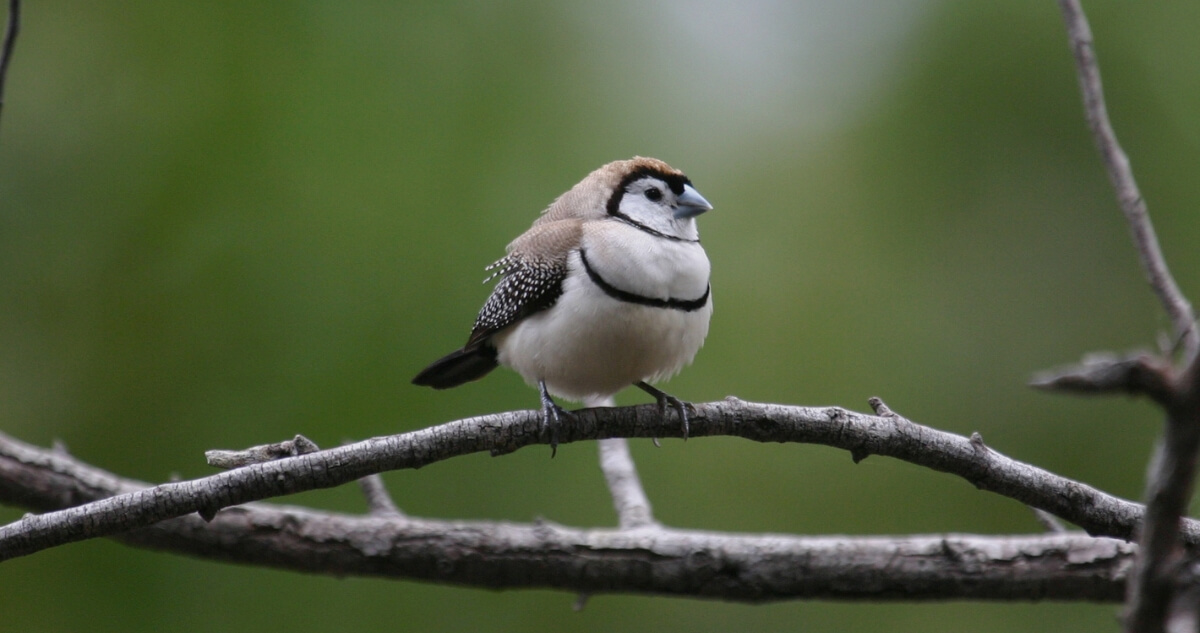
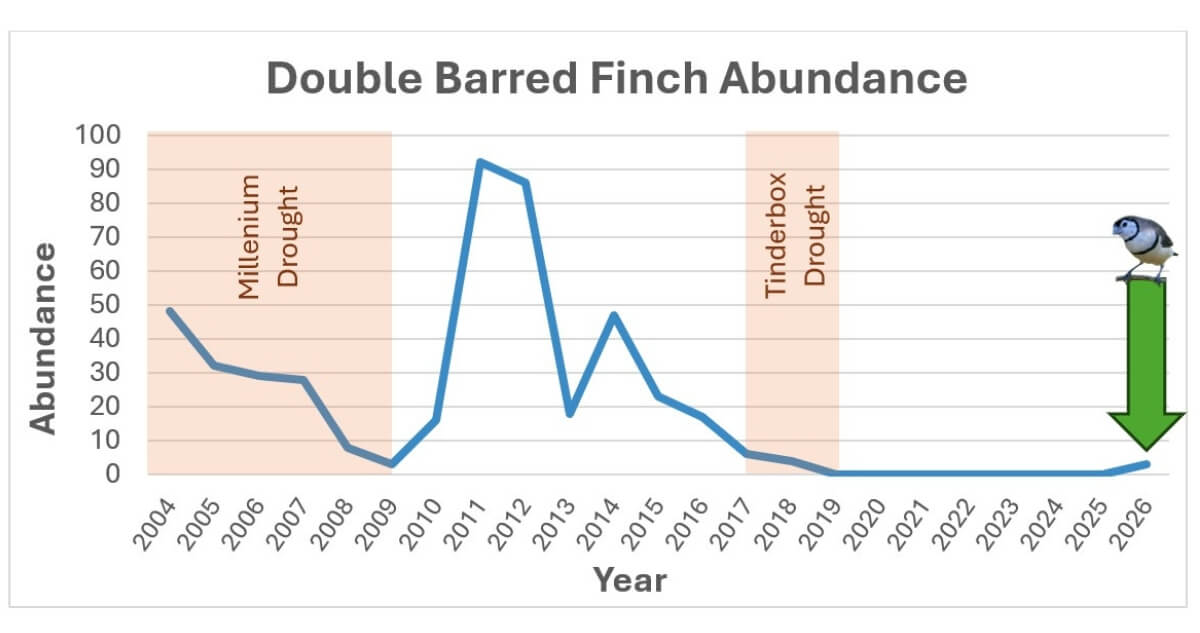
For the first time in eight years, the Double-barred Finch has been recorded at Sydney Olympic Park. This fancy‑dressed feathered friend was once a regular sight in the Parklands; however, drought, heat event, habitat loss, and competitive exclusion from territorial species like the Noisy Miner caused numbers to decline to the point where they hadn’t been observed in the Park since 2018.
Challenges for woodland birds
Finches and other small woodland birds are particularly sensitive to changing environmental conditions, with the Millennium Drought (2001–2009) and the Tinderbox Drought (2017–2019) correlating with observed declines.
Another challenge facing small woodland birds like the Double-barred Finch is competitive exclusion from aggressive territorial species, particularly the Noisy Miner. Noisy Miners prefer open woodland with little to no understory vegetation and can congregate in large colonies. These colonies are highly territorial, often chasing smaller birds away from the area.
Helping our feathered friends
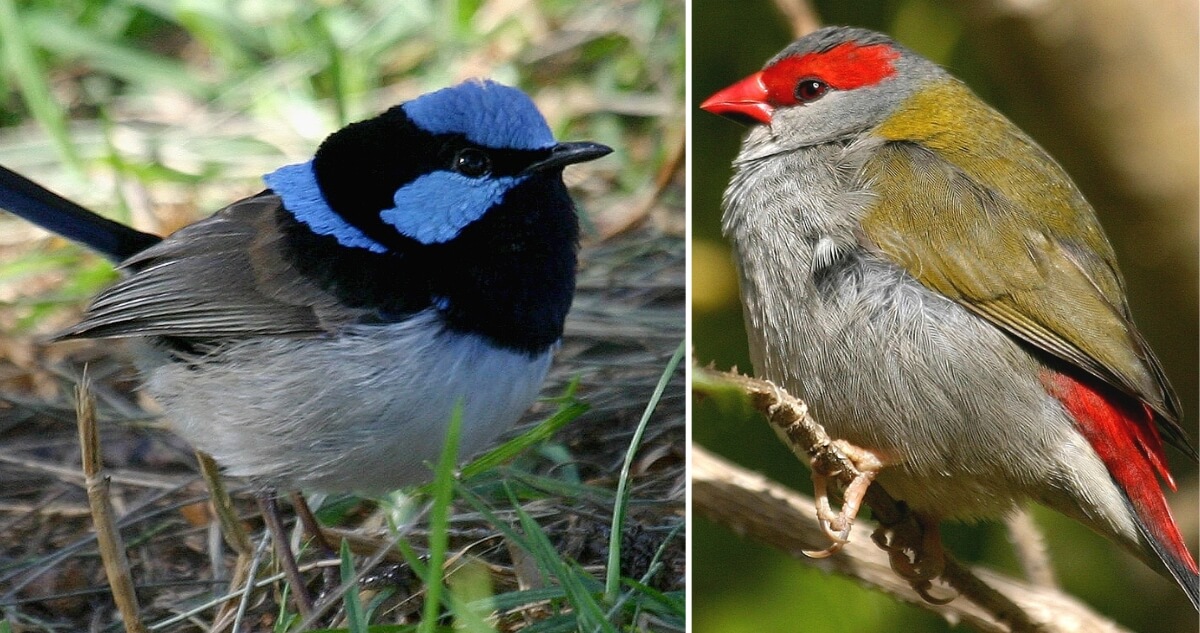
SOPA’s Habitat Management Coordinator has spent years working with habitat contractors to restore mid‑level and understory vegetation that provides nesting habitat and vital protection for smaller birds from predators and Noisy Miners. These plantings have now had time to grow and establish, and they are already being used by woodland birds. The recent sighting of Double-barred Finch, along with increasing numbers of resident woodland birds such as the Superb Fairy-wren and Red-browed Finch, is a strong indicator that this ongoing vegetation management is proving effective.
This story highlights that what we plant — and how we plant it — can have on local wildlife. And you can help too! The plants in your garden can provide important food and shelter for wildlife, and it’s often easier than you think. Here are some articles outlining how to make your garden a wildlife haven:
Birdlife Australia – How to create a bird-friendly garden
ABC News – How to attract native wildlife and birds to your garden
You might also be interested in...
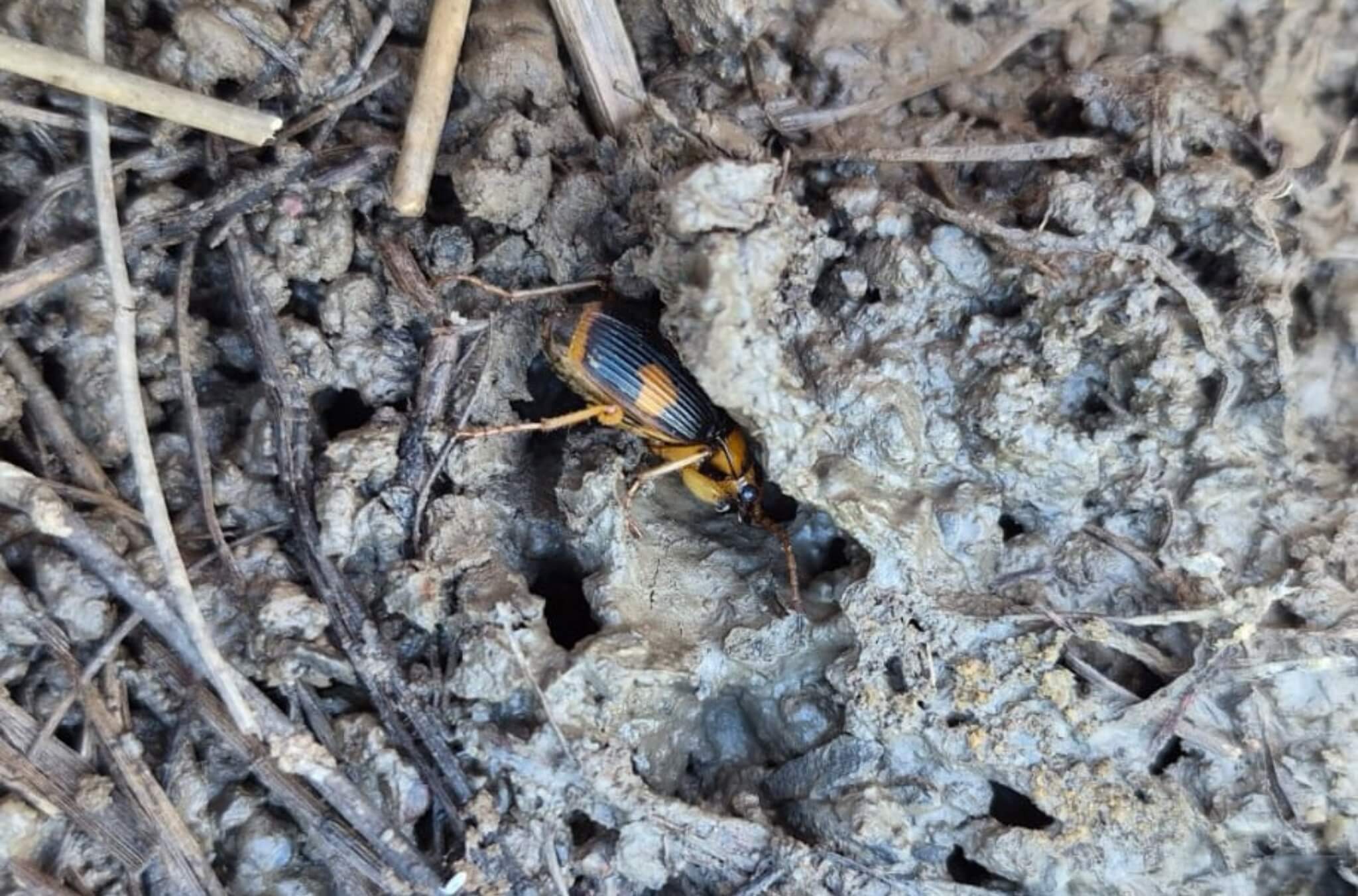

The Bombardier Beetle (Pheropsophus verticalis) belongs to the ground beetle family (Carabidae).
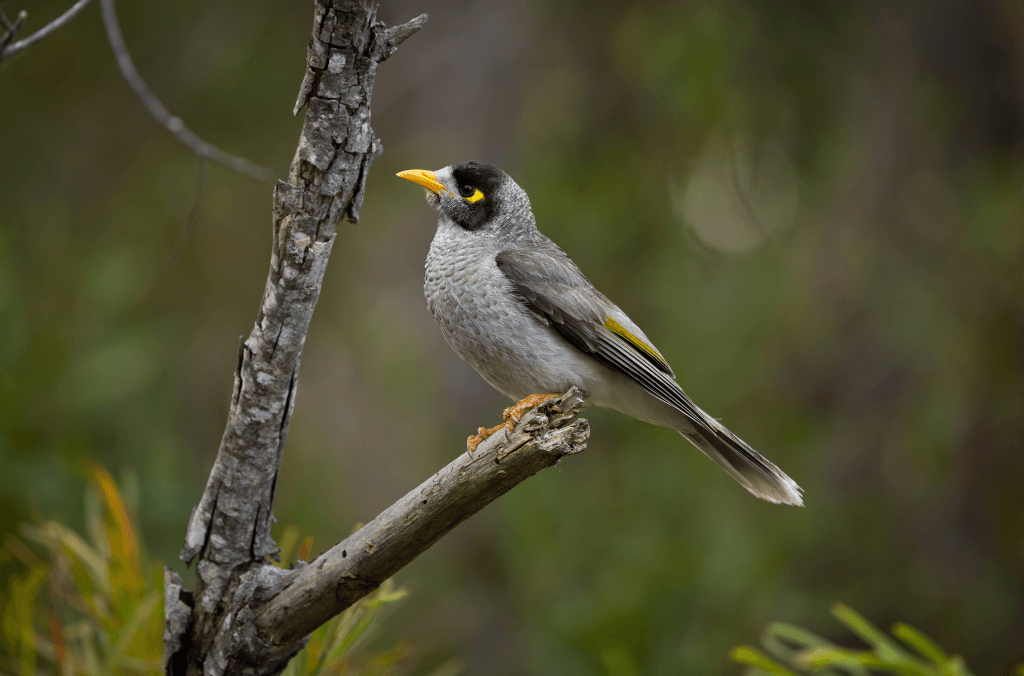
If the Noisy Miner and the Common Myna entered a bird lookalike competition, they'd almost certainly make the final.