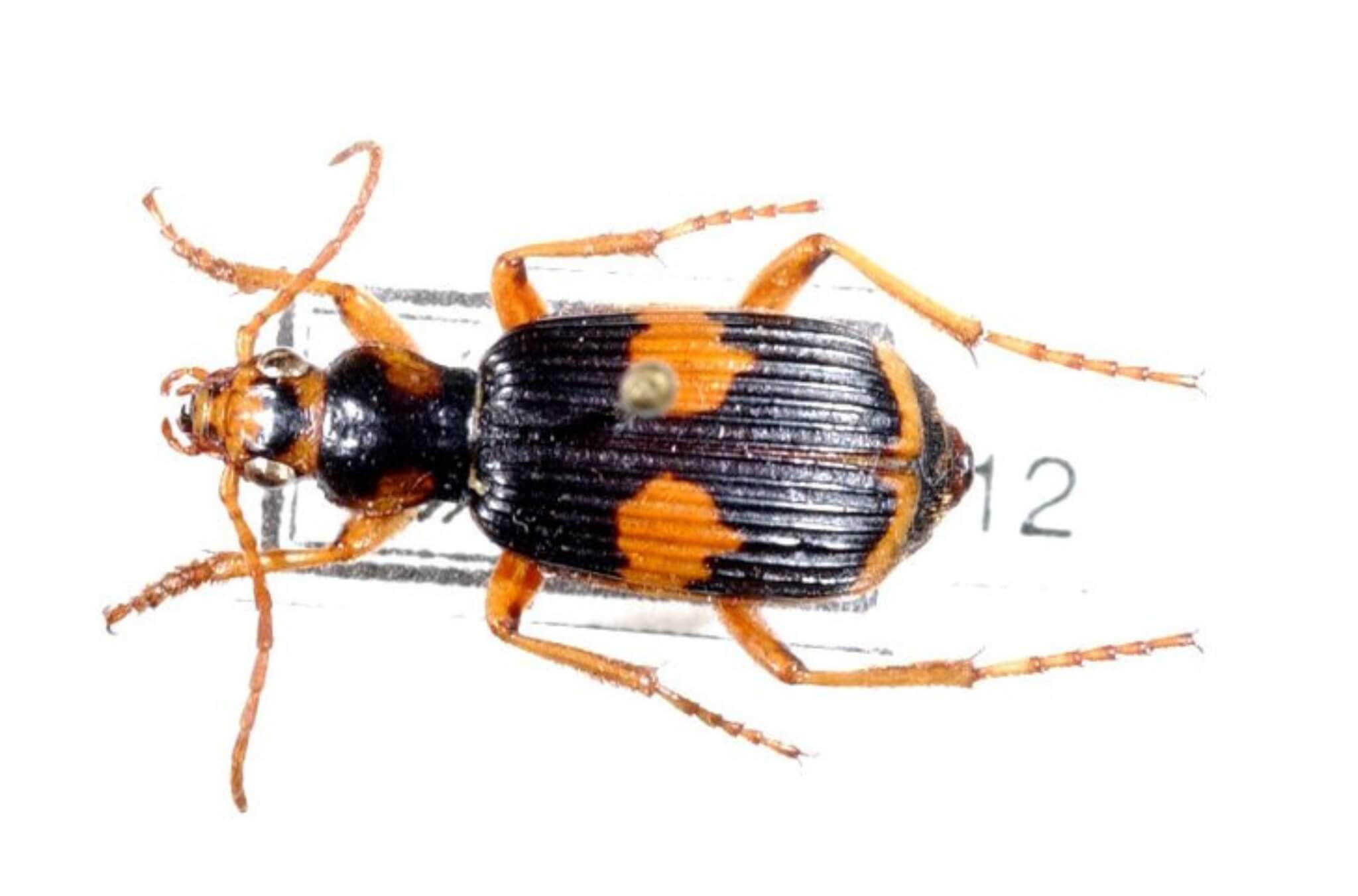
The Bombardier Beetle (Pheropsophus verticalis) belongs to the ground beetle family (Carabidae), of which there are about 2,500 species in Australia. It is a small-sized beetle, ranging from 1.2 to 1.8 cm in length.
Habitat
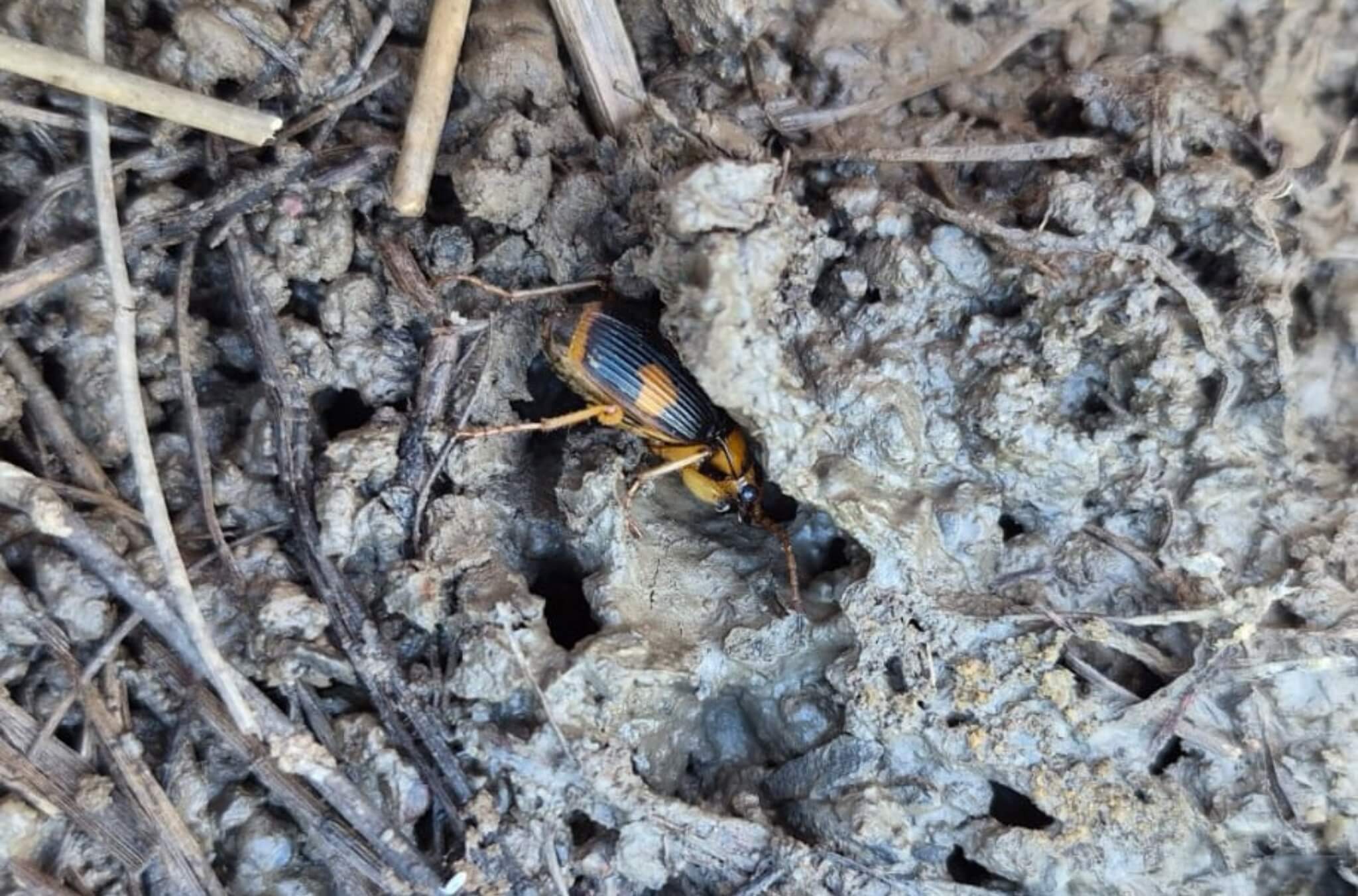
The Bombardier Beetle is found in eastern Australia and commonly lives close to water on undisturbed riverbanks, around ponds, and on floodplains. They prefer damp or moist ground cover, hiding under fallen logs, leaf litter, and rocks during the daylight hours before emerging to hunt at night.
Feeding and diet
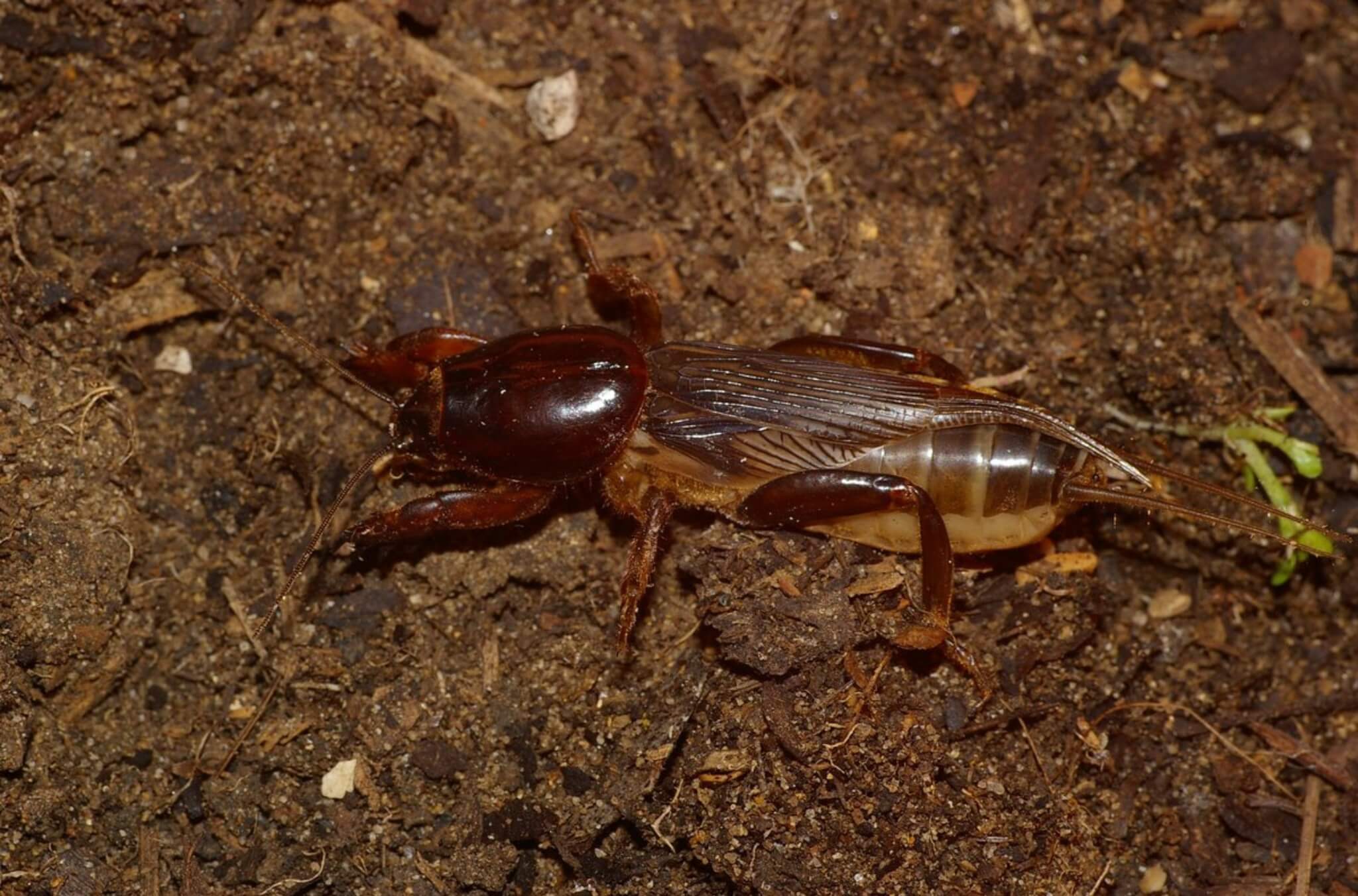
This nocturnal beetle is carnivorous, hunting other small insects on the ground or in trees, with mole crickets (Gryllotalpa sp.) being among their preferred prey. Bombardier Beetle larvae are also carnivorous, feeding on other insects and their eggs.
Other behaviours and adaptations
When threatened, the Bombardier Beetle uses a special gland at its rear end to mix two chemicals together, resulting in an explosion with a loud popping noise. If the noise alone doesn’t scare off a would-be predator, the accompanying spray of steam and chemicals from the rear of the beetle usually does the trick! The beetle produces temperatures of over 100°C in the gland, which acts as a specialised, reinforced explosion chamber, and can produce up to 80 explosions over a four-minute period.
You might also be interested in...

If the Noisy Miner and the Common Myna entered a bird lookalike competition, they'd almost certainly make the final.
Sydney Olympic Park is home to some record-breaking avian athletes and oddities.